- 5 min spent reading
Commitment, the hidden superpower of business
Miten luoda Suomen huonoin jääkiekkojoukkue
Last spring, a friend and I had the idea to start a men's ice hockey team at the third division level. Our village had previously had a team, but we wanted to revive the activity. Full of enthusiasm, we organized a survey event, and to our surprise, a large group of people signed up, 41 players. We were excited by the number of participants.
The survey event was successful, the players had a good feeling and our minds were full of hope as we thought about the upcoming ice hockey season. We even joked that we could start two teams, a first and a second team. However, quite quickly after the survey event, we realized that getting the players to commit to the activity was not that easy. The most common answer when we asked if an individual player would join the team for the next season was "maybe".

The summer went by and the enthusiasm had time to subside somewhat over the course of a few summer months. We registered the team for the league and waited for the first game. We got 12 players in for the first practice game.
We have played a total of 13 games this season so far, and lost every one of them. The local newspaper called us "probably the worst ice hockey team in Finland". We have scored 40 goals, but allowed 177 goals. We have lost many games by ugly numbers.
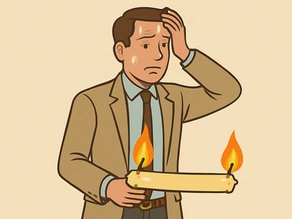
What was the lesson of this experience? Success requires commitment, even at the lowest level of ice hockey. The more committed the team we have, the greater the likelihood that we will succeed in the tough competition. If "maybe" wasn't enough for us to succeed in the third division, how on earth would it be enough if we want to reach the top in real business?
Menestyminen vaatii sitoutumista, jopa jääkiekon alimmalla sarjatasolla.
What works in private life doesn't necessarily work in business.
We live in a time when people change jobs more often, get married less often, and have fewer children. One of the trends challenging our society is commitment, or rather the lack of commitment and the weakness of decision-making.
As humans, we are used to the idea that when one train leaves, another train comes, after one reel comes the next, food is always available from the store and the store is always open. We can always keep all the doors open. We don’t know yet what we will do tomorrow, because if we decided, we would be afraid that we would miss out on something. We cannot commit, because there may be a better offer around the corner. We live in a world of abundance, where everything is constantly available, there is no need to say no to anything. We can always say “maybe” to everything.
Of course, everyone can live their own life exactly the way they want. Not everyone is forced to plan their grocery shopping for a week, get married, and have three children. Of course not. However, doing business and being afraid of commitment is a bad combination.
As subcontractors, we have noticed that the fear of commitment also affects business life. Spontaneous and short, so-called spot deals attract buyers because they are not binding, and you can always look for the next cheapest or fastest option again.
However, we at Brione have noticed that success and development require commitment and perseverance.

The price of myopia
What happens when the fear of commitment enters business? What if we move to a way of life where everything is available all the time, and there is no need to really commit to anything. The challenge is that this strategy does not yet work in business, and if it does, it usually produces poor results. We have identified at least four negative things that occur when you try to build your own business impulsively, without a long-term plan, with short-term partnerships.
- Material costs increase:
When only small batches are ordered, pallet surcharges, transportation surcharges and packaging surcharges accumulate costs. Single purchases are often more expensive than long-term cooperation. Cooperation can give you a competitive advantage in production costs. You can produce cheaper and get better margins for your product. - Longer delivery times:
When there is no partnership, the subcontractor cannot prioritize the customer. The material is not available on the shelf, but has to be ordered. The company has to wait longer for its products. Time is money, and longer delivery times mean wasting money. - Service capacity deteriorates:
Without commitment, the subcontractor's ability to plan its production suffers, which can directly affect the customer's business. - In the worst case, the customer is left empty-handed:
Lack of commitment can lead to a situation where the necessary material or parts simply cannot be obtained. This was commonplace during the corona times, when production chains were broken internationally.
Lean thinking and commitment
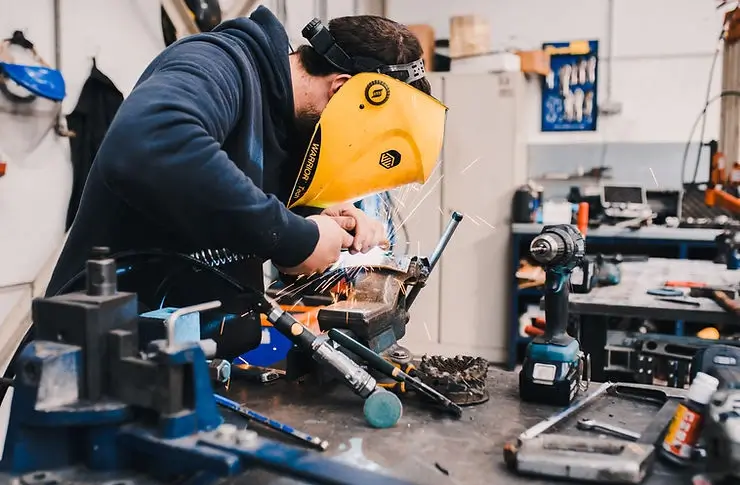
Modern production models, such as Lean, have taught companies to reduce their inventories and optimize their operations to the extreme. This is effective in many ways, but operating at the extremes also brings risks. When there are no inventories and the supply chains of materials are stretched, production can stop.
Committing to a long-term partnership makes it possible to prevent such problems. When the subcontractor and the customer work closely together, it is possible to agree on operating models that benefit everyone.
In partnerships, the growth path is shared.
Collaboration and a better future
At Brione, we value long-term cooperation, not only for ourselves but especially for our customers. We have noticed that long-term customer relationships produce the best results for all parties. We invest in our customers and want to offer them the best possible service. We can offer our partners more: better quality, faster deliveries and cost-effective solutions.
Commitment and long-term perseverance are the way to better cooperation, more efficient production and a more sustainable future in both ice hockey and business.
Brione – your partner for long-term cooperation and quality.
Ps.
This article was written by amateur hockey player and founder of the worst hockey team in Finland, Sebastian.